
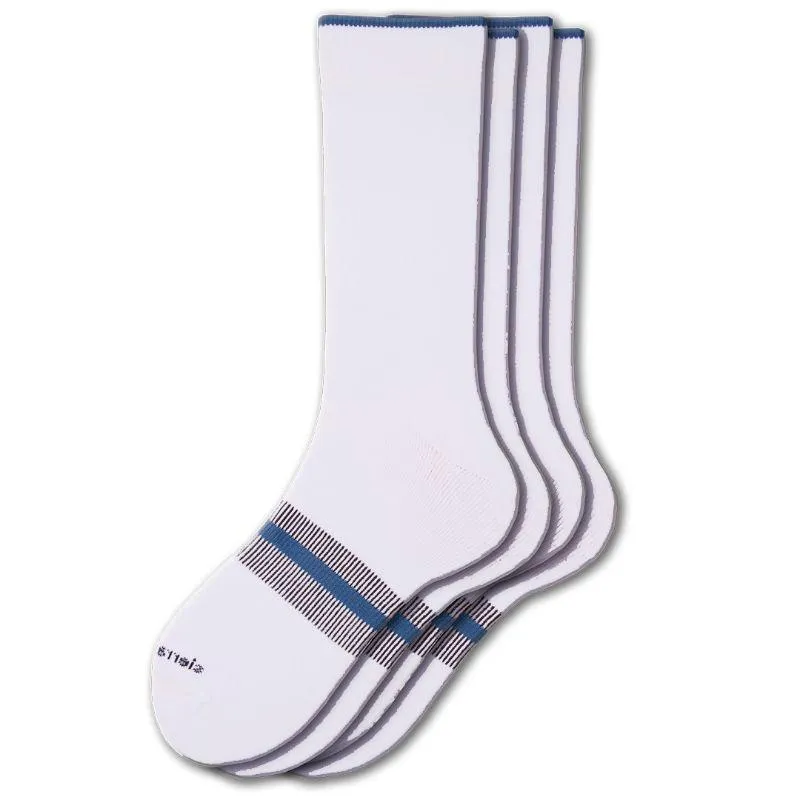
Ask any group of guys what annoys them about socks, and the answers come fast. They slide down, they trap heat, they squeeze the calf, they thin out at the heel. Most of these problems are avoidable. Finding comfortable men’s socks has less to do with fancy labels and more to do with knowing what to look for.
“They Keep Slipping Down”
Slipping usually comes down to length and elastic. A sock that’s too short for your calf will drift no matter what you do. Try quarter or crew heights, and check that the cuff has a bit of stretch built in.
Sizing plays a part too. Plenty of men buy by shoe size without reading the range printed on the pack. If you sit at the top of a range, go up one size. You’ll get a firmer hold around the ankle.
“My Feet Sweat All Day”
Sweat is a fabric problem. Thick, tightly woven cotton holds on to water and stays damp. Look for blends with bamboo-derived or performance fibers that move moisture away from skin. Mesh panels across the top of the foot help airflow as well.
Rotation matters here. A pair worn two days in a row never dries fully. Most lists of men’s wardrobe essentials USA shoppers rely on include tees, jeans and a belt. Socks belong on that list, in numbers high enough to rotate.
“The Cuff Leaves Marks on My Legs”
Deep red lines around the calf mean the top band is too tight. This bothers people who stand most of the day, or anyone with swollen ankles by evening. A relaxed, non-binding cuff makes a noticeable difference.
You don’t have to give up structure entirely. Some pairs use a loose knit at the top and keep a snug fit through the arch. That combination holds the sock in place without cutting off circulation.
“The Heels Wear Out in Weeks”
Thin heels are the first thing to go, especially if your shoes rub. Check for reinforced heel and toe areas before buying. They’re usually easy to spot because the knit looks denser or slightly different in color.
Trimming toenails and keeping shoe insoles intact helps as well. Rough edges inside a shoe chew through yarn faster than any amount of walking. A small repair to your footwear can double the life of a sock.
“Nothing Matches Anything”
Mismatched pairs are a quiet daily irritation. Fix it with a simple system. Keep to two or three color families, such as black, navy and gray, and buy multiples so any two socks work together.
Add one or two patterned pairs for weekends so your drawer doesn’t feel boring. Toss odd singles into a basket for a month. If their partners don’t show up, retire them for cleaning cloths.
“They Bunch Up Inside My Shoes”
Bunching often means the sock is too big, or the heel pocket sits in the wrong place. A heel that rides up the back of your ankle will fold under your arch all day. Check that the foot shape follows a natural curve, so the heel lands right where your own heel does.
Thickness plays a part. A heavy cushioned sock in a snug dress shoe has nowhere to go. Match weight to footwear: thin for dress shoes, medium for daily sneakers, thick for boots. This one habit clears up a surprising number of foot complaints.
“They Fall Apart After a Few Washes”
Pilling and thin spots show up when yarn quality is low, or washing is rough. Wash socks inside out on a gentle cycle, and skip fabric softener, which coats fibers and traps odor. A little extra care can add months to a pair.
Look at the toe seam as well. A flat, smooth seam rubs less than a bulky one, so blisters are less likely on long walking days. Rough seams are usually the first thing to irritate sensitive feet.
Conclusion
Comfort rarely comes from one big decision. It comes from fixing small irritations one by one, and socks are a good place to start because the fixes are cheap and the results show up the same day. Pay attention to which pairs you reach for first each morning, and let that favorite teach you what your feet actually prefer.
Next time you’re restocking your drawer, take a look at what’s on offer at sierrasocks.com and match each complaint above with a better pair.